
People experiencing homelessness often use alcohol as a response to trauma and
as a way of coping with difficult life circumstances. Often the only treatment
option available is abstinence-based and whilst this may work for some, it does
not always work for those experiencing homelessness, and harm-reduction
approaches can be more beneficial. MAPs are an example of a harm reduction
intervention developed for this population. Much of the research on MAPs has
been conducted in Canada where they have existed since the 1990s. Evaluation
studies have reported a range of positive outcomes of MAPs including to alcohol
consumption and harms, relationships, and interactions with healthcare/
community justice services.
Scotland’s first MAP opened in Glasgow in 2021 and provides accommodation for
up to 10 men including en-suite rooms and communal living areas. Alcohol is
provided through the day in accordance with residents’ alcohol plans and the
doses of alcohol are called ‘pours’. The purpose of this research is to evaluate this
service to understand its effectiveness in Scotland, but also to help inform any
future services. The project has four distinct work packages:
WP1: Realist review of international evidence to understand what works, for
whom, and in what circumstances for MAPs
WP2: Quantitative exploration of the MAP
WP3: Qualitative exploration of the MAP – residents
WP4: Qualitative exploration of the MAP – stakeholders and staff
Dr Hannah Carver, Dr Emma King and Jessica Greenhalgh discussed the findings from the four work packages during our Alcohol Occasional seminar in September 2025.
The recording of the seminar and the event report are available to view below.
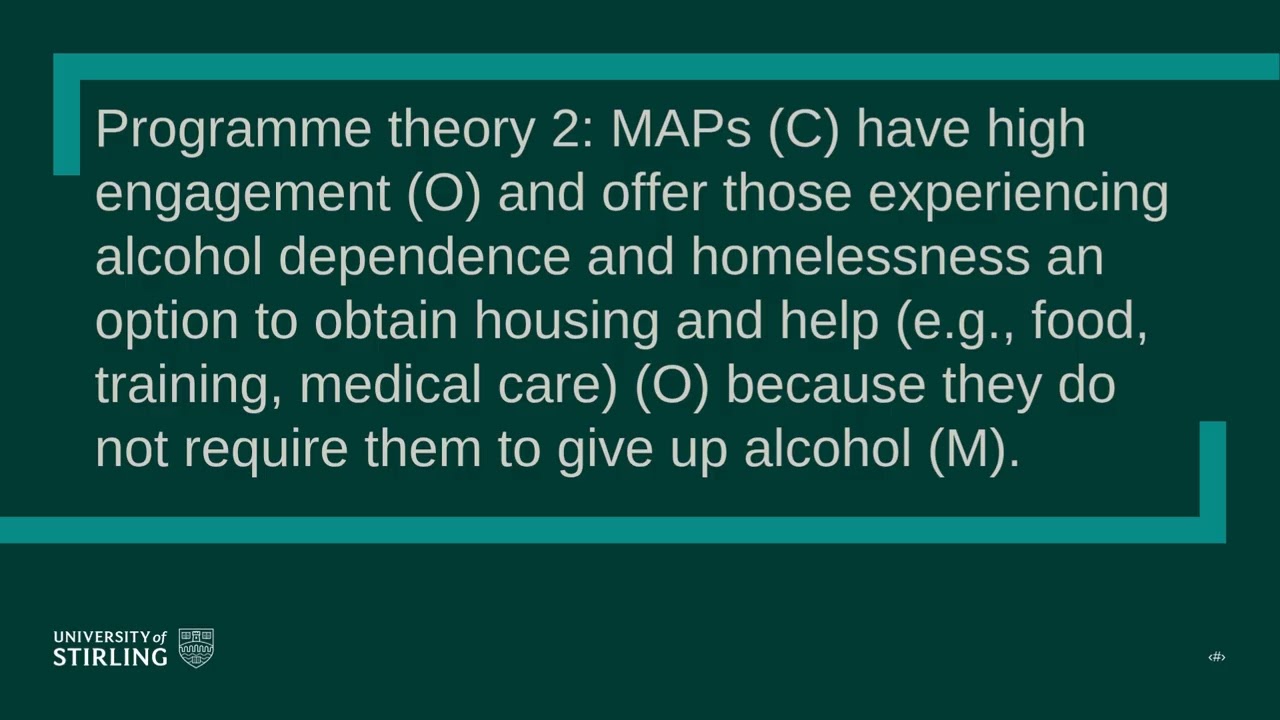

Scotland’s First Managed Alcohol Programme: Evaluating the Impact to Inform Future Service Delivery and Research
November 2025